FOR INFORMATION ON INSURANCE SOLUTIONS CALL OR WHATSAPP +1 849-514-9838 | info@hernandezpeguero.com

Concrete Home? Why You Still Need Property Insurance in the DR (2026)
Concrete homes reduce some risks—but not hurricanes, water damage, fire, theft, or liability. Learn key coverages and mortgage tips for 2026.
PROPERTY/HOMEOWNERS INSURANCE
HernandezPeguero.com
2/3/20269 min read
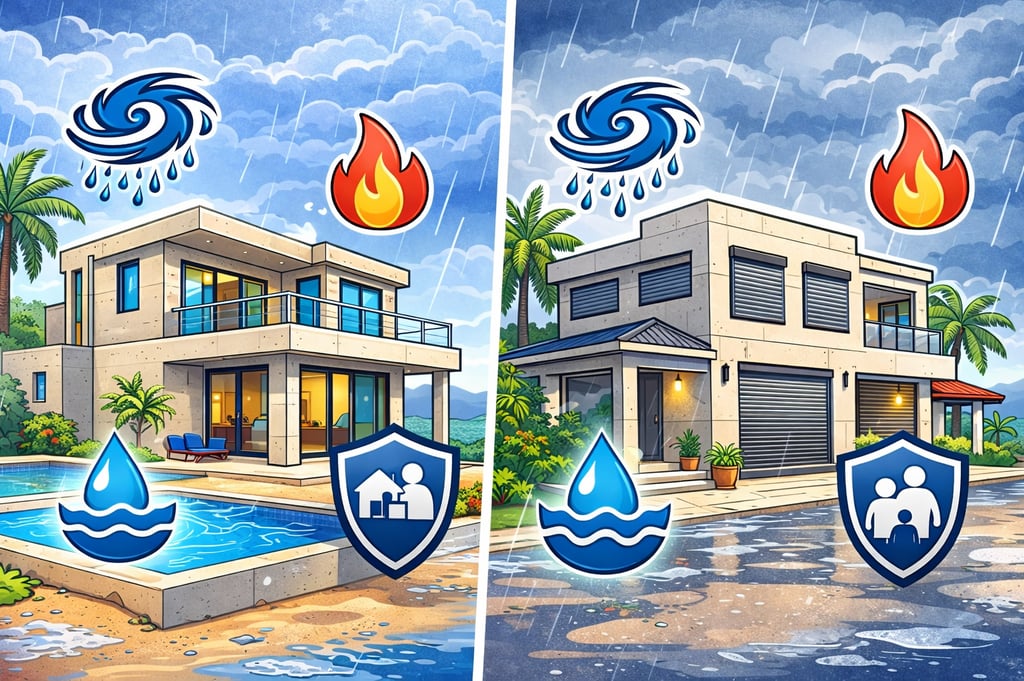
Why Concrete Homes Still Need Property Insurance in the Dominican Republic (2026 Guide)
If your home is built with concrete (as most properties are in the DR), it’s normal to wonder: “Do I really need property/homeowners insurance?” Concrete feels solid—and it often is. But insurance isn’t only about a building collapsing. It’s about financial recovery when real-life problems hit: storm-driven water intrusion, electrical events, plumbing leaks, fires, theft, third-party liability, and even the “small” incidents that become expensive quickly.
This 2026 guide is written to be practical and service-oriented: what concrete does and doesn’t protect you from, which coverages DR homeowners actually benefit from, and how to approach insurance smartly when you’re getting a mortgage.
Concrete is strong… but your risk isn’t just “the walls”
Concrete construction reduces certain structural risks compared with wood-frame homes, but your property risk is broader than structure alone:
1) Storms don’t need to break concrete to create major losses
In the DR, hurricane season is part of the yearly reality. The official Atlantic season runs June 1 to November 30. Even when the main structure holds, common loss patterns include:
Wind pressure damaging roofing components, terraces, pergolas, doors, and window systems
Wind-driven rain entering through frames, sliding doors, vents, and small envelope gaps
Water intrusion causing damage to drywall, ceilings, paint, flooring, cabinetry, and electrical systems
Power fluctuations/outages leading to damaged electronics, AC boards, pumps, gate motors, and appliances
And the DR is widely recognized as highly exposed to climate and weather hazards (storms, floods, landslides, etc.).
2) Fire and smoke don’t care what your home is made of
Concrete doesn’t burn, but the contents do—and smoke damage can be extensive. Electrical fires, kitchen incidents, surge-related events, and neighbor-related exposures (especially in condos) are why “fire and allied perils” remains a cornerstone of home coverage.
3) Water damage is one of the most common (and misunderstood) losses
Concrete is porous. Add humidity, plumbing lines, rooftop tanks, bathrooms stacked in condos, and AC condensation—and water losses can happen even without a dramatic “flood.”
In mortgage-oriented property insurance examples published by banks, you’ll see water-related sublimits and definitions (for example, “accidental water damage” listed with a percentage limit). This is exactly why wording matters: some policies cover sudden/accidental leaks, but exclude maintenance issues or long-term seepage.
4) Liability can be the biggest surprise
If someone slips on wet tile, a balcony railing fails, a falling object damages a neighbor’s vehicle, or a guest is injured on your property, you’re not facing “a concrete problem”—you’re facing a liability claim. Liability coverage is one of the most valuable parts of homeowners insurance, yet it’s often overlooked.
Property insurance vs homeowners insurance in the DR
On our site, we often separate the concept like this:
Property/structure coverage: protects the building itself (the insured “construction value”).
Homeowners-style coverage: can include contents + liability + additional benefits (like assistance services), depending on plan design.
If you want a fast refresher, check our previous posts:
“What You Need to Know About Property Insurance in the Dominican Republic” (overview of structural vs contents)
“How to Protect Your Home in the DR with Homeowners Insurance” (core risks and basics)
This article goes deeper specifically for concrete homes and 2026 decision-making.
Why insure a concrete home? The 9 real reasons (2026)
1) To protect your finishing and improvements (where the money actually is)
Many concrete homes in the DR have high-value components that are not “the structure” in the way owners think:
Imported kitchens and cabinetry
Porcelain floors, wall finishes, decorative stone
Windows/doors systems and hardware
AC systems and ducting
Inverters, batteries, solar components
Pumps, cistern/tank systems, filtration
Smart home systems, cameras, automated gates
These are often what you repair/replace after storms, leaks, or electrical events.
2) To cover contents (especially for furnished homes and rentals)
If the property is furnished (primary residence, second home, Airbnb/short-term rental), contents can easily represent a major portion of your financial exposure: furniture, TVs, appliances, linens, décor, tools, and personal items.
3) To avoid “self-insuring” hurricanes and water intrusion
Even a well-built concrete home can suffer from damaged openings, broken glass, interior water damage, and cleanup costs—especially during active storm seasons. Hurricane coverage commonly includes a deductible structure.
4) To address earthquake exposure (the DR is not “earthquake-free”)
The DR sits in a region with known seismic and tectonic activity (Hispaniola has significant fault systems and regional earthquake history).
Concrete structures can perform well, but seismic damage can still occur—especially when construction quality, detailing, or soil conditions vary.
5) To transfer theft and vandalism risk
Concrete doesn’t stop burglary. Doors, windows, and access points remain vulnerable—especially for second homes that are unoccupied part of the year.
6) To get “loss of use” or “loss of rent” protection
If your home becomes temporarily unlivable after a covered event, some policies can cover alternative accommodations. For rental owners, “loss of rent” (or similar wording) can be a meaningful add-on.
(If you operate a rental property, internally link to “Property Insurance for Rental Homes in the Dominican Republic” for a dedicated rental-risk breakdown. )
7) To access practical assistance benefits (hugely underrated for part-time residents)
Many DR property policies include or offer home assistance (plumbing, electrical, locksmith, etc.). Our Home Assistance guide explains how these services work and why they’re especially valuable if you’re not living full-time in the country.
8) To reduce “claims stress” with a clear process
Insurance isn’t only the policy—it's also the claim workflow. Check our post to “How to File a Claim on Homeowners Insurance in the Dominican Republic” for a step-by-step view of documentation and timing.
9) Because “concrete” doesn’t protect you from exclusions, sublimits, or underinsurance
Two owners can both say “I have insurance,” but one policy might cover wind + flood + contents + liability, while another only covers a narrow set of perils with low sublimits. The difference shows up when you actually need the policy.
The most common coverages DR homeowners benefit from
Below is a coverage “menu” written in plain language. Not every insurer uses the same labels, but the concepts repeat.
A) Building / structure (edificación)
Covers physical damage to the structure and built-in parts of the home.
Typically includes:
Fire, lightning, explosion
Smoke damage
Impact (vehicles/aircraft)
Riot/malicious damage (sometimes listed explicitly)
Debris removal (often percentage-based)
Collapse (sometimes included as an additional peril)
B) Windstorm / hurricane / cyclone
A core DR need. Some policies include it automatically; others treat it as a key selection. Bank examples show “cyclone/hurricane/tornado/wind” and even “water damage due to cyclone.”
2026 tip: don’t only ask “Is hurricane covered?” Ask:
What is the deductible and how is it calculated?
Are windows/doors covered the same way as the roof?
Is interior water intrusion covered if it enters through storm-created openings?
C) Earthquake
Often shown explicitly in bank and market examples.
Earthquake coverage can be critical for peace of mind, especially if your property is near coastal zones or in regions with known seismic activity.
D) Flood / inundation / “inundación o mar de leva”
Flood coverage is one of the most misunderstood terms. Some policies cover certain types of inundation; others exclude it unless specifically added. Bank program examples list flood/inundation wording directly.
2026 tip: confirm whether “flood” means:
External rising water
Sea surge (“mar de leva”)
Heavy rain accumulation
Or only limited forms of water damage
E) Accidental water damage (internal leaks)
Often subject to sublimits (for example, shown as a percentage in some bank program summaries).
Ask about:
Burst pipes, sudden leaks, AC condensation overflow
Bathroom/shower leaks to a neighbor’s unit
Exclusions for long-term seepage or poor maintenance
F) Contents / personal belongings
Best for furnished homes, family residences, and second homes. Covers:
Furniture, electronics, appliances
Clothing and personal items
Sometimes special limits for jewelry, cash, art, etc.
G) Personal liability (civil liability)
Covers bodily injury and property damage claims for which you’re responsible. Highly recommended for:
Homes with frequent guests
Properties with pools, terraces, balconies
Rentals/short-term stays
H) Loss of use / alternative accommodation
If a covered event makes your home unlivable, this can cover temporary housing costs (policy-dependent). Our property insurance overview references alternative accommodation as a common benefit.
I) Loss of rent (for landlords)
If you depend on rental income, ask for this specifically.
Popular add-ons that matter in real life (especially for concrete homes)
In 2025 proposals we’ve reviewed across multiple carriers, certain add-ons show up repeatedly because they match what actually breaks in DR homes—especially the mechanical and electrical side.
1) Equipment breakdown
Great for:
AC compressors and boards
Pool pumps/heaters
Water pumps and pressure systems
Electric gate motors
2) Electronic equipment (all-risk / surge-related protection)
Useful for:
TVs, laptops, home theater
Smart appliances and control panels
Systems impacted by voltage fluctuations
3) Glass breakage
High-value in condos and villas with large sliding doors.
4) Home Assistance (asistencia en el hogar)
Often includes emergency plumber, electrician, locksmith, etc.—especially valuable if you live abroad or only visit seasonally.
5) “Overlooked risks” endorsements
Some policies address niche but real exposures—smoke, collapse, malicious damage, and other perils that owners don’t think about until a claim happens.
Mortgage in the DR: why you should shop your insurance (and how to do it correctly)
If you’re financing the property, insurance becomes more than “a good idea”—it’s usually part of the bank’s checklist.
For example, in a published foreigner mortgage requirements document from Banco Popular Dominicano, the checklist includes “policy issuance and endorsement” and housing insurance against fire and earthquake.
And banks with in-house or affiliated insurance programs clearly position property insurance as protection for the collateral (the home in guarantee).
What “shopping” means in practice
Many borrowers assume: “The bank gives me the insurance, so that’s the only way.” Not always.
Some lenders explicitly mention an endorsed policy option—meaning you can bring a policy from an accepted insurer that meets the bank’s conditions (and lists the bank correctly as mortgagee/loss payee). For example, Banesco República Dominicana highlights an “Opción de Póliza Endosada” with a list of accepted insurers.
Why bank-arranged/force-placed insurance can cost more (and cover less)
In many markets, when a lender places insurance (or pushes a bank-controlled option), it can be more expensive and primarily designed to protect the lender’s interest rather than your full needs.
That doesn’t automatically mean every bank option is “bad”—some are convenient and perfectly fine—but it does mean it’s smart to compare.
A practical, non-salesy mortgage insurance checklist (2026)
When you shop your policy, your goal is simple: meet the bank requirements + protect yourself properly.
Ask for these items:
Bank name & mortgage clause correctly listed
Sum insured basis (replacement cost vs appraisal vs loan amount)
Perils required by the bank (commonly fire + earthquake; sometimes additional perils)
Deductibles for hurricane and earthquake (how calculated)
Proof documents the bank will accept (policy, certificate, endorsements)
Claim reporting timelines and required documents
Some bank programs state notice within 24 hours and require specific certificates for certain perils (meteorology/sismology certificates, etc.).
Whether contents and liability are included (banks often focus on the building, but you should decide if you need broader protection)
Choosing limits correctly: the #1 place owners accidentally underinsure
Concrete owners often think: “My home is solid, so I’ll insure a low amount.” The risk is that after a claim, you discover the insured value doesn’t reflect:
Current reconstruction and contractor pricing
Imported finishings and cabinetry
Mechanical systems and equipment
Debris removal and cleanup
2026 tip: Review your building and contents values at least annually—especially if you renovated, furnished the home, upgraded AC/pumps/inverters, or changed the property use (owner-occupied → rental).
Condo owners: special notes (because the building is shared)
If you own a condo, you may have:
A building/master policy through the condominium association (sometimes limited)
A need for contents + internal improvements coverage
A higher priority for liability (water leaks to neighbors, visitor injuries, etc.)
This is one of the most common areas where “I assumed I was covered” turns into a painful surprise. If possible, ask for a copy of the condo’s master policy summary and insure the gap.
Documentation habits that make claims easier (and reduce disputes)
Even before you buy insurance, set up a simple “claim-ready” folder:
Photos/video walkthrough of the home (including serial numbers of appliances)
Receipts or estimates for major upgrades
A contents inventory (even a simple spreadsheet)
Emergency contacts for the building/HOA and maintenance
A plan for storm prep (shutters, moving outdoor furniture, etc.)
For claims workflow, internally link to our claim guide.
Also note that some lender programs list specific documents by peril (fire reports, police reports, repair quotes, meteorology/sismology certificates).
FAQs (quick answers)
“My house is concrete. What’s the most important coverage?”
For most owners: fire + hurricane/wind + water damage clarity + liability, then tailor earthquake/flood based on location and risk tolerance.
“If I have a mortgage, can I pick my own insurer?”
Often yes—depending on the bank—especially if they accept an endorsed policy that meets their conditions.
“Is bank insurance always more expensive?”
Not always, but many consumer and lender-placed frameworks show it can be higher cost and narrower in focus because it protects the lender’s interest first. The smart move is to compare.
“Do I need contents coverage if it’s a second home?”
If it’s furnished, usually yes—because contents losses are common (water, theft, electrical events), and replacing everything at once is expensive.
Why Choose Hernández Peguero Insurance Brokers?
A concrete home in the DR has a specific risk profile: it’s less about “will the walls fall” and more about wind-driven rain, water damage, electrical events, and liability—plus getting the right wording for hurricane, earthquake, and flood.
When we help clients with property/homeowners insurance, we focus on clarity and fit:
Translating policy wording into plain language (what’s covered, what’s capped, what’s excluded)
Structuring coverage for your real use case (primary home, second home, rental, condo vs villa)
Helping mortgage borrowers bring compliant “endorsed policies” when the bank allows it—so you can compare options instead of defaulting to the first premium offered
Ongoing support for renewals and claims preparation, including guidance on documentation and timelines
Ready to Get a Quote?
Protect your Dominican Republic property today with well-structured homeowners/property insurance.
👉 Contact us now:
Phone / WhatsApp: +1 849-514-9838
Email: info@hernandezpeguero.com
Hernandez Peguero
Your trusted partner for comprehensive insurance solutions.
Broker
Coverage
© 2024. All rights reserved.